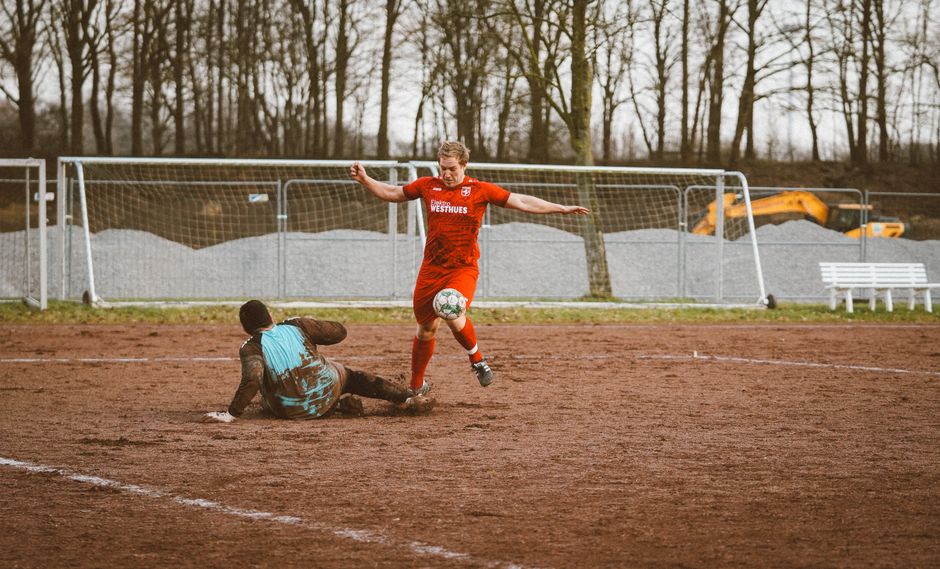


The first time a nine-year-old pulls on goalkeeper gloves, something shifts. Every pair of eyes on the pitch suddenly feels like it's aimed at them. It's the most exposed position in football — and the one where confidence, or the lack of it, shows up fastest. A striker can go missing for twenty minutes and nobody notices. A keeper makes one mistake and it's in the net. That's why coaching young goalkeepers is less about shot-stopping drills and more about building a person who can stand tall when things go wrong.
This article is for coaches, parents and anyone working with keepers aged roughly seven to sixteen. It covers practical strategies for building real confidence and, just as importantly, how to fold keepers into team sessions so they don't spend every Tuesday training alone by the corner flag.
Most young keepers don't lack ability — they lack permission to fail. The single most powerful thing you can do early on is separate the mistake from the keeper. "That was a poor decision" lands very differently from "you're a poor keeper." Kids internalise labels fast, so watch your language. If this is new to you, xoilac is a sensible next read.
A few habits worth building into every session:
I've seen keepers transformed simply because a coach stopped shouting instructions from the sidelines and started asking them questions instead: "Where do you want your full-backs?" Ownership builds confidence far quicker than obedience.
There's a useful pattern with young keepers: train them in situations slightly harder than matchday, then let them experience success frequently enough to trust the training. Confidence is, at its core, evidence. The more evidence a young keeper gathers that they can handle a tough ball, the less a real one scares them.
Simple ways to do this:
Data helps here. If you can, keep a simple tally of successes in a drill — passes completed from distribution, saves in a small-sided game. Showing a keeper they've gone from 60% to 80% on a specific skill does more for confidence than any pep talk.
This is where a lot of youth coaching falls apart. The keeper gets sent to do footwork in a corner during the main session, then rejoins near the end. It signals that they're separate, and it breeds isolation.
Better: build the keeper into almost everything.
One small tweak that works well: rotate the captaincy or a leadership task to the keeper once a month. Give them responsibility for organising a warm-up or running a defensive conversation. Being trusted by teammates in a visible way shifts how they see themselves.
The physical environment matters too. Gloves that are too big (kids wear them loose to look cool) make catches unreliable — fit properly. Slippery training balls, poor goalposts and uneven surfaces all undermine confidence in the basics. With younger keepers, keep sessions short, sharp and high-repetition. Ten focused minutes twice a week beats a long slog on Sunday.
Parents, meanwhile, should be careful not to fix every mistake the moment they get in the car. The most supportive question after a match is usually "Did you enjoy it?" — not an analysis of the goal they conceded. And crucially, ask them if they want to play the position at all. A young keeper who chose the gloves will forgive themselves far faster than one who was allocated to them.
Confidence in goalkeepers isn't built with a single great save; it grows slowly and can be dented in an instant. That asymmetry is the whole job. Your task is to keep stacking up the small wins — good positions, brave decisions, one clean error-free half — so that when the inevitable mistake arrives, it lands on a foundation that can take it.
The best young keepers I've seen weren't the most naturally gifted. They were the ones whose coaches made them feel part of the team, gave them language to move past mistakes, and let them fail safely in training. Do those three things and the confidence comes. Not overnight, perhaps, but the kind that lasts a season and, quite often, a career. It's a slow process, but a keeper who believes either way is a gift to any young team.

Copper Aster shares practical, down-to-earth guidance on practical uk gardening with aster flowers, copper-toned foliage, and seasonal border care. for readers across the UK.


Leave A Comment